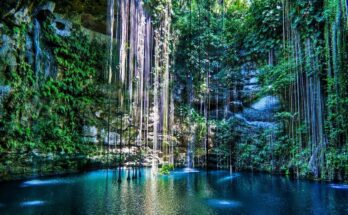
We keep exploring hidden corners of the Riviera Maya, and sharing examples of the incredible places there are to see in this region of Mexico. If we first showed—through images—an example of a cenote (Yal-ku) connected to the Caribbean Sea that looks like a giant aquarium because of the number of colorful fish (located in Akumal), in this case the example is an inland cenote, hidden in the jungle that covers much of the Yucatán Peninsula.
Tours que te pueden interesar
Experiencias recomendadas para tu viaje. Reserva fácil y segura.
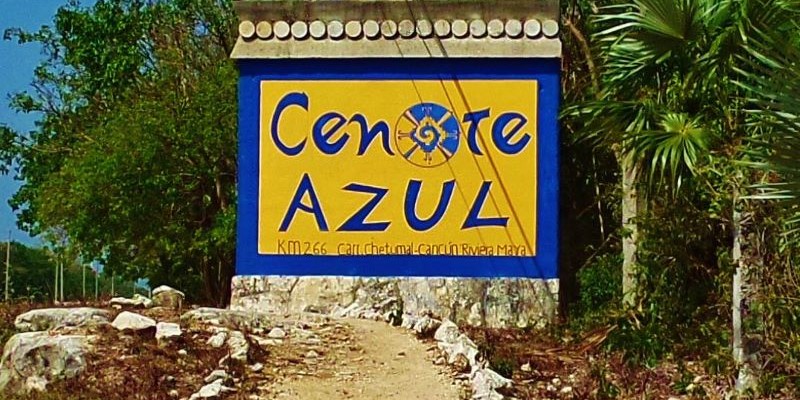
It’s called Cenote Azul, and it’s located next to the highway that runs from Playa del Carmen to Tulum, about 25 minutes from the former. The truth is there are thousands of cenotes across the peninsula, and dozens are open to visitors. Cenote Azul is just one more example of the beauty of this type of natural formation, which—tourism-wise—offers an alternative to the beach and a great excursion to include during your stay.
What is a cenote?
Basically, a cenote is the name used throughout this region for freshwater outcrops from underground rivers fed by rain, in an area where the ground is made of limestone. Across the Riviera Maya, rivers are underground, because over thousands of years the water eroded the rock and filtered beneath the surface. In some spots, the water eroded the rock so much that it reaches the surface, forming open cenotes; but there are also closed cenotes inside underground caves, or semi-open ones. The link in the first paragraph shows what an open cenote looks like when these rivers flow into the Caribbean.
In the Cenote Azul shown in these photos, the water emerges to the surface like a river, but then continues its path to the sea by filtering underground.
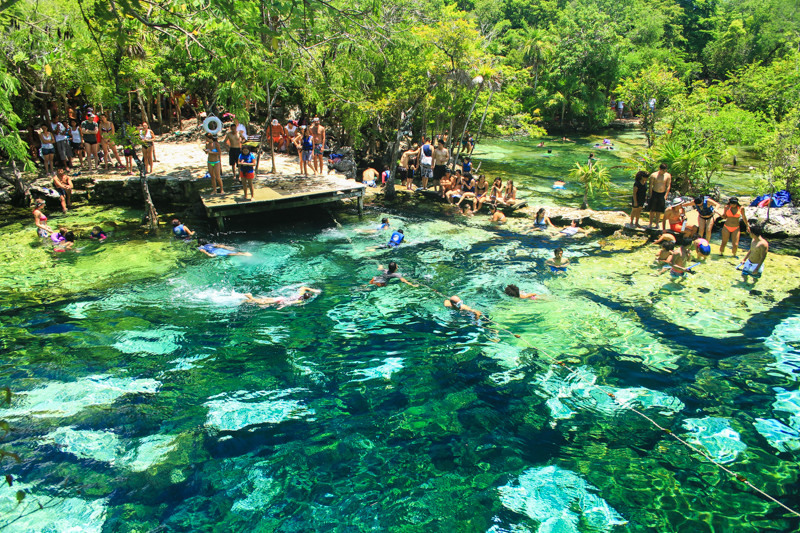
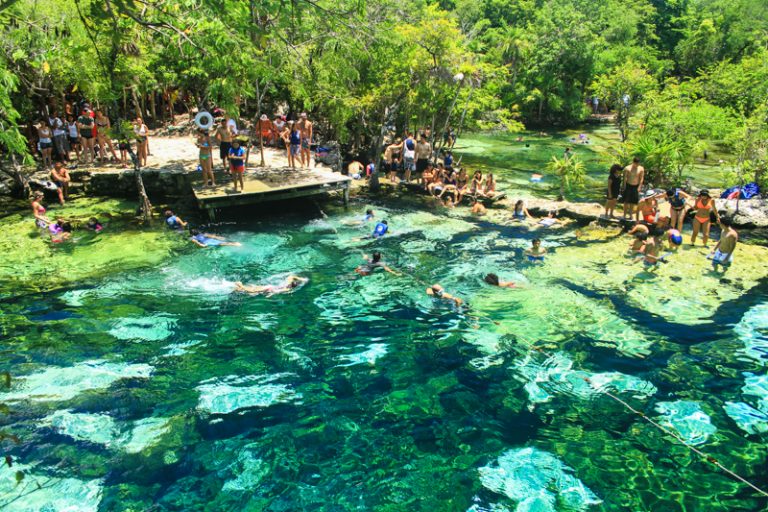
Visually, the result is nothing short of spectacular: a true natural pool that, in the deepest sections (around five meters), turns a vivid blue. Add to that the beauty of the surroundings, with the jungle wrapping around the cenote and a few trees that seem to grow out of the water among the rocks.
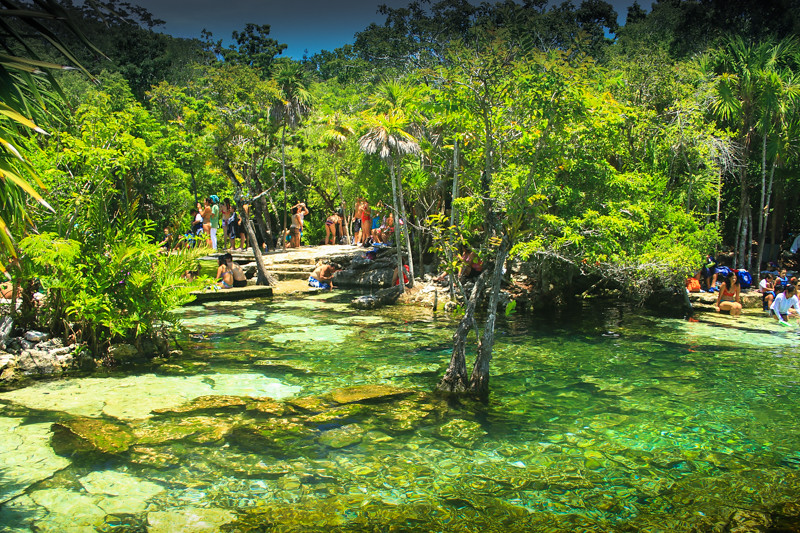
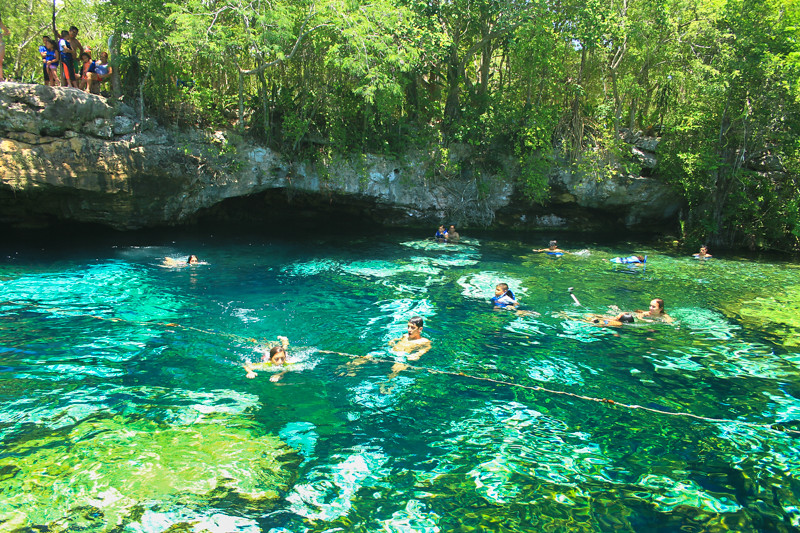
And on top of all that, there’s the underwater show. It’s essential to bring your snorkeling gear to discover the abundance of fish in every corner. Even though, in this case, since it’s an inland cenote, the fish aren’t as colorful as in cenotes connected to the sea, it’s still a beautiful spectacle you can easily spend hours enjoying.

At Cenote Azul, no one should miss the chance to snorkel for hours. Even though the water is a bit cooler than the Caribbean, it’s completely pleasant—and above all, crystal clear:
Around the main cenote, there are other smaller cenotes hidden in the jungle:
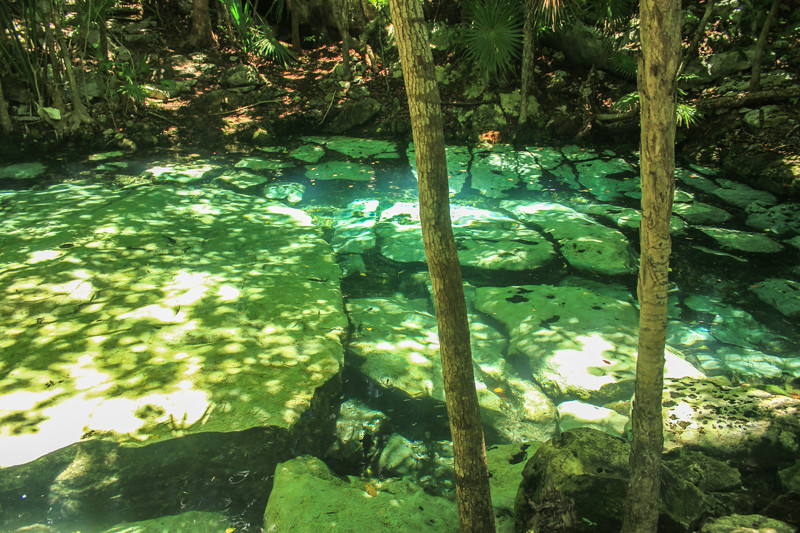
Some visitors who are the true owners of the place:

The main cenote, stretching through the jungle, has several distinct sections with different depths:
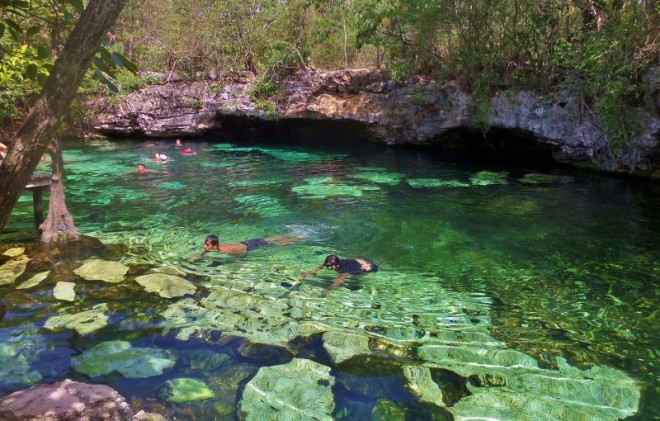
In the deepest part, it’s a true blue pool:

How to get there: On the map, look for the point labeled “Cenote Azul” right by the highway. In the same area there are several cenotes close together, side by side, and even a cenote park that lets you visit multiple spots in one go. The visit is ideal for a full day or an afternoon. Admission is about 80 Mexican pesos per adult (around 6 US dollars). There are shaded areas, places to sit, basic services like restrooms, and a small shop where you can buy food.
Don’t think twice—you’ll find plenty of corners where you can swim and cool off from the Riviera Maya heat, as if you were in a true jungle oasis.
::contentReference[oaicite:0]{index=0}